
In her Guide to Boston, Helen Johnston Encounters a complex history of revolution, slavery and a hit sitcom on a solo trip to Boston
It’s often said that modern America doesn’t really have much history when you consider how far back British chronicles go. Even King Charles on his state visit to mark the 250th anniversary of America’s independence quipped that it was “just the other day” to us. That doesn’t make it any less interesting though, and a visit to Boston, the birthplace of the American Revolution, gives a fascinating insight into how it came about.
Among the few things I knew about Boston before visiting was that it was the setting for the sitcom Cheers, and that tea was once thrown into the harbour in protest at British rule. Clearly, I had a lot to learn. By chance, Boston made the news shortly before my trip because the Scottish ‘Tartan Army’ football fans drank the city dry during the 2026 World Cup. Luckily it had recovered from the hangover by the time I got there on my solo jaunt in August.
The flight from London is a bearable six-and-a-half hours and so, despite feeling a bit tired from the five-hour time difference, I got stuck straight into sightseeing. I was staying in the Back Bay area right across the road from the commanding Boston Public Library with its four American flags out front and wide steps flanked by two bronze statues of women, one representing art and the other representing science. Inside was a treasure trove of literature, as expected, including the first folio of 36 of Shakespeare’s works published in 1623.
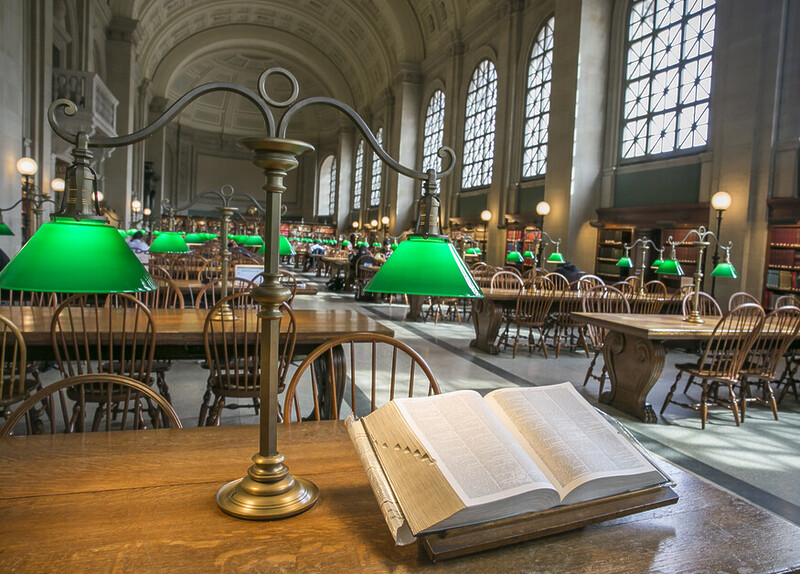
Unexpectedly, there was a large selection of DVDs and CDs for loan, for those who still have something to play them on; a Newsfeed Café for live TV broadcasts; and a gift shop. A public noticeboard provided a window into Boston life with posters about free English classes, immigration services, trans care, and a camp for girls aged eight to 12 offering a “transformative day of exploration and self-discovery”.
Observation Deck
My walk then took me from the hushed world of ancient texts to the noise of modern-day consumerism in the Prudential shopping centre, inside of which is the View Boston Observation Deck. This is one of the attractions which can be accessed with the CityPASS ® which gets you into four attractions from a choice of seven for a cost of about £62, saving 45% on regular ticket prices. So up to the 52nd floor I went and stepped out of the lift to a breathtaking 360° view of the city in all its summer glory.
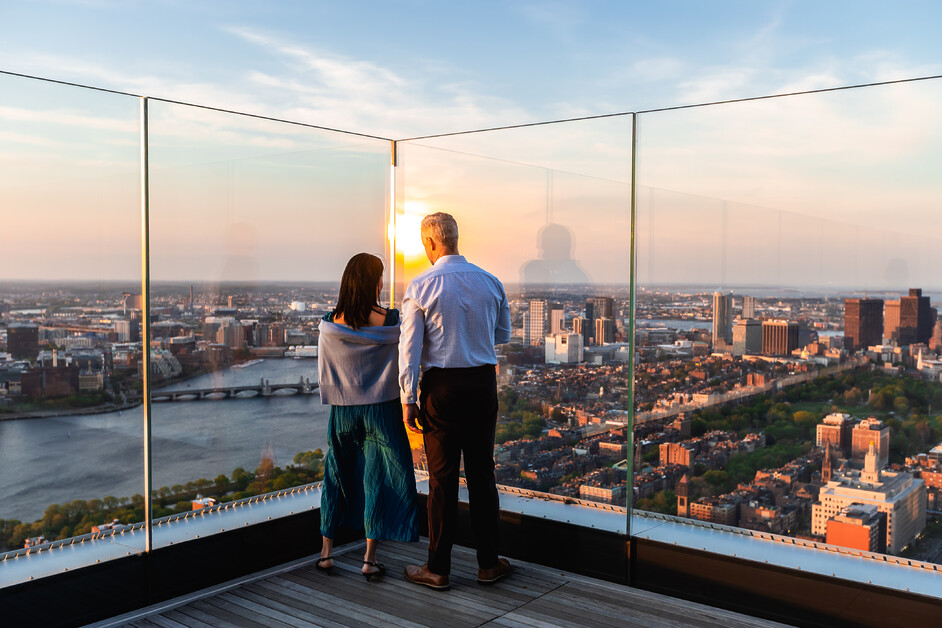
Down below was the Charles River snaking between the skyscrapers and the numerous streets of brownstone town houses which give Boston more of a European feel than other American cities. And there was the harbour with a scattering of green islands dotted out to sea and Logan Airport on its reclaimed land. Cars looked like toys as they negotiated the city streets. Having such an amazing view on the first day mapped out the city for me and helped me to get my bearings, which was useful for all the walking I did (20,000 steps on one day alone).
Harbour Cruise
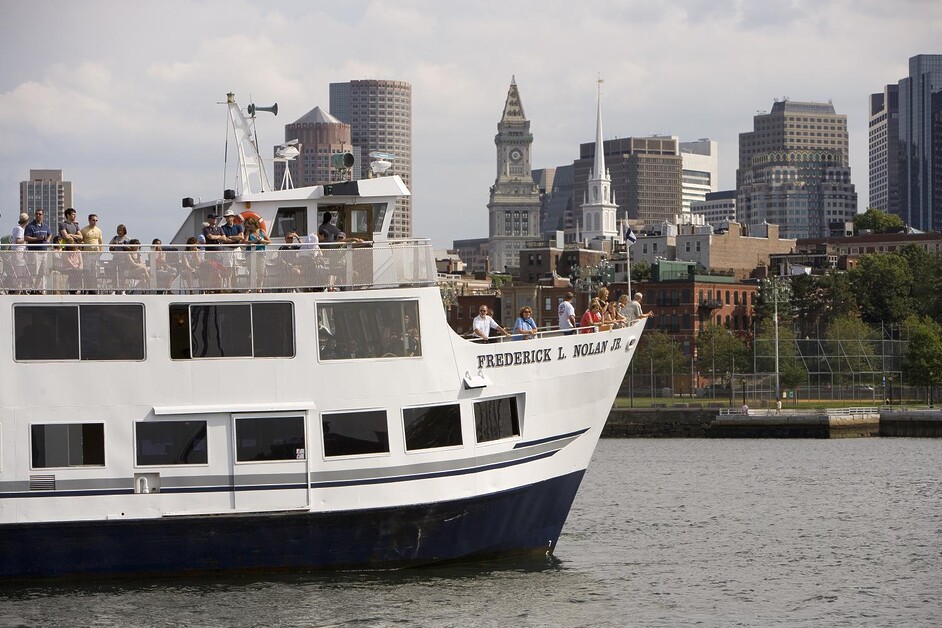
The CityPASS® was useful for helping me to plan and I booked a harbour boat cruise before leaving home, to get me up and out of the hotel on my first full day. The trip was with Boston Harbor City Cruises and the narrator Liz was excellent, pointing out notable sights throughout the two-hour experience, such as Fort Independence on Castle Island, built by the British and then abandoned during the American Revolution. There were several pointed references to overcoming the British and who could blame her during this anniversary year of the Americans escaping the yoke of colonialism.
This then was the very harbour where 340 chests of tea were dumped in 1773 by furious protestors demanding “no taxation without representation”. Britain closed the port and sent troops in, military battles followed in 1775 and the rest, as they say, is history.
And there was more history to learn about when the cruise took us past the world’s oldest warship still afloat, a tall, rigged vessel called the USS Constitution (nickname Old Ironsides), which was commissioned by America’s first president George Washingon and launched in Boston harbour in 1797. There’s a public lottery every year for tickets to get on board on July 4 when she is towed out to sea for a ‘turnaround cruise’.
Most of the harbour is built on reclaimed land and its more recent history includes a decision by the authorities to stop dumping rubbish on Spectacle Island (so called because it looks like a pair of glasses) and begin a massive clean-up operation. The result has been so successful that Liz told us three-bed condos with two parking spaces on the harbour front now go for $5m each. Another success has been an innovative new sewage treatment plant which produces fertiliser pellets for the use of orange farmers in Florida. As Liz said: “Next time you’re enjoying your Florida orange juice you can thank the good people of Boston for it!”
Marine Life
Back on dry land it’s just a short walk to the New England Aquarium, my third use of the CityPASS®. There was a large group of schoolchildren and it was very crowded so I didn’t linger long. The aquarium is home to an array of marine life, including a healthy coral reef, Amazon rainforest exhibits, and a tank where you can touch sharks and rays.
There is an array of educational material around the place and there is no doubt that worthy conservation work is being done here. However, seeing the African and Rockhopper penguins in their indoor concrete pen, being sprayed periodically with cold water, I found depressing. It made me wonder how much damage humans have caused to Earth for this to be the only option for these endangered creatures.

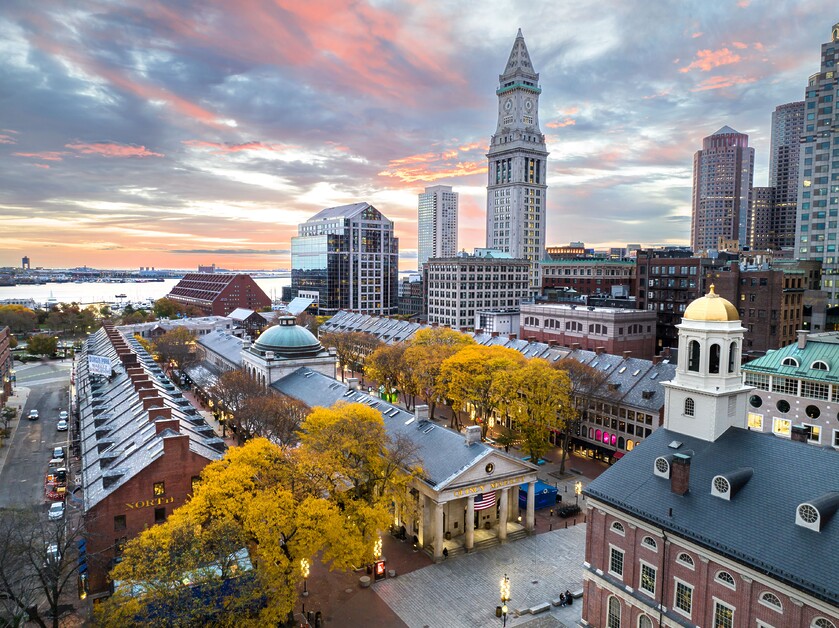
Another short walk from the harbour is the popular Quincy Market, recommended by Liz, which proved to be the perfect place to sample some Boston fare. It’s a food hall with numerous stalls offering an array of dishes and was bustling with hungry customers. Lobster was on sale at several stalls, sometimes spelt ‘lobsta’ to highlight the Boston accent which tends not to pronounce the final R in a word. I went for the lobsta salad sandwich and it was delicious.
I had been advised earlier by a fellow bus passenger to try a whoopie pie, but the lobster man told me they’re not made anymore and to try the next best thing, a Boston Cream dessert. This had a thick layer of chocolate on top of a custard-like dessert, which was good but not distinct from other similar desserts I’ve eaten back home.
Freedom Trail
From the market it’s easy to pick up the Freedom Trail which marks out 16 significant sites connected to the American Revolution along a two-and-a-half-mile walking route. You can get guided tours but it’s easy enough to do on your own, and you can choose whether to do it all or just parts of it.
Faneuil Hall is next door to Quincy Market and served as the first marketplace when it was built in 1742 by wealthy merchant Peter Faneuil as a gift for the city. It was also a venue for concerts and meetings and a hub for local government. Today it houses shops catering to the tourist trade, alongside information boards about Boston’s history, including the slave trade which Faneuil himself was involved in.
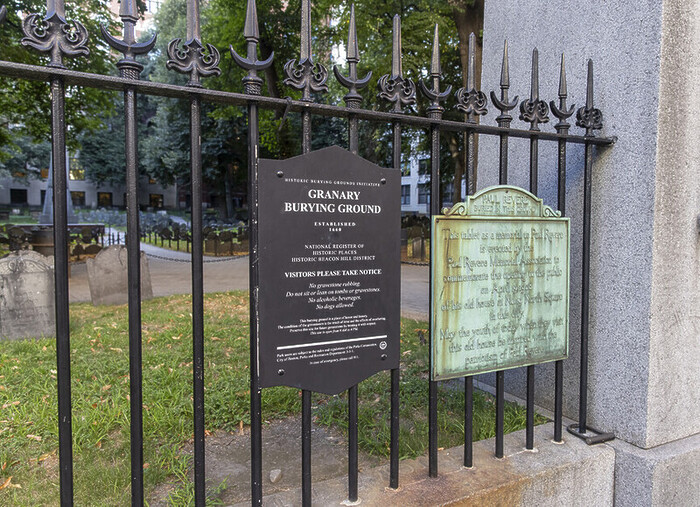
From here I walked past the site of the oldest public school in America, founded in 1635 and marked by a mosaic in the pavement on the appropriately named School Street. Further along the trail is Granary Burial Ground dating back to 1660 and containing the graves of Faneuil and other notables such as Josiah Franklin and his wife, parents to Benjamin Franklin who was one of America’s founding fathers.
The ground also contains the graves of the victims of the Boston Massacre of March 5, 1770 when British soldiers fired into a crowd of protestors, killing five of them.
Many of the graves include a skull between wings, a Puritanical symbol the decay of the body while the soul takes flight. Walking along the trail it struck me that Boston’s history of ‘freedom’ is a complex one because while fighting for their own independence from Britain, many of America’s founders, including Franklin, owned slaves.
The irony of that obviously escaped them, although Franklin did later become an abolitionist. Add to that the way Native Americans had been forced off their land – they were living in the Shawmut area some 15,000 years ago, long before it was renamed Boston – and the notion of freedom becomes even more contentious.
Art And Artifacts
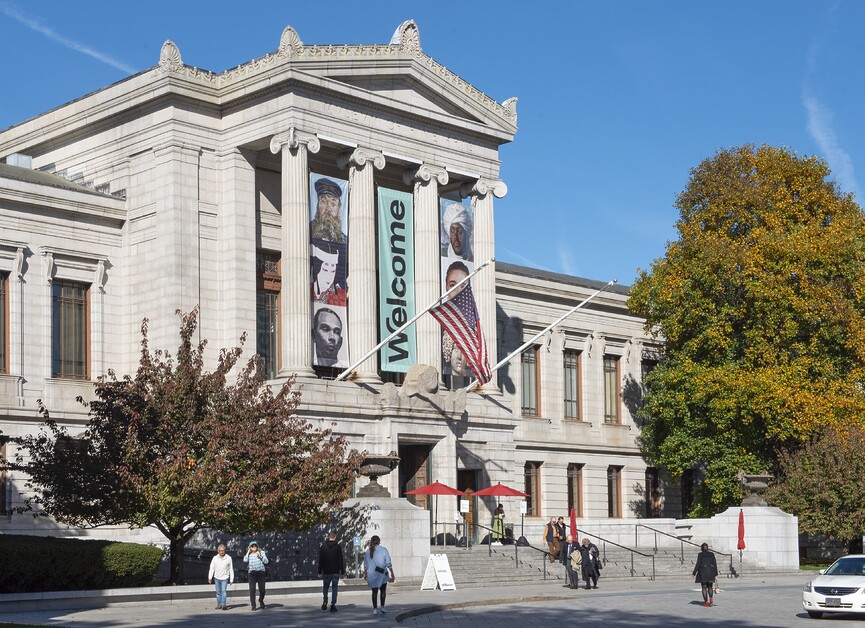
There’s also an interesting debate to be had at the Museum of Fine Arts, another CityPASS® attraction, and it’s a debate being had at British museums too, regarding the ethics of keeping other countries’ treasures. All credit to the MFA for attempting to address this by explaining how Egyptian artifacts have found their way into its collections. They were discovered during an archaeological dig sponsored by the museum and Harvard University between 1905 and 1947 and the Egyptian Antiquities Service allowed the museum to keep a portion of what was found.
There is also a frank appraisal of America’s first president George Washington by New York-based artist Alan Michelson who is a member of the Mohawk indigenous people. Washington’s legacy is destructive towards the Native Nations in the way he ordered their land to be taken. Michelson’s sculpture recasts a heroic likeness of Washington by French sculptor Jean-Antoine Houdon in a mirrored finish, inviting visitors to reflect on the paradox of his legacy as founder and destroyer.
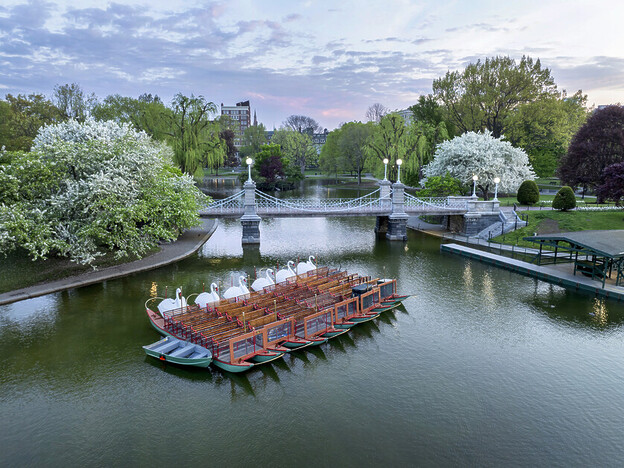
There is more thought-provoking art in the beautiful Boston Public Garden which is well worth a visit and was where I was part of a small group which quite by chance witnessed a marriage proposal (she said yes). A memorial to another couple’s love, that of Martin Luther King and his wife Coretta, is celebrated in the stunning The Embrace sculpture, which features just their arms wrapped together. The couple met in Boston in 1952 and just steps from the sculpture is the bandstand from where Dr King spoke to a crowd of thousands during a rally in 1965.
Knowing Your Name
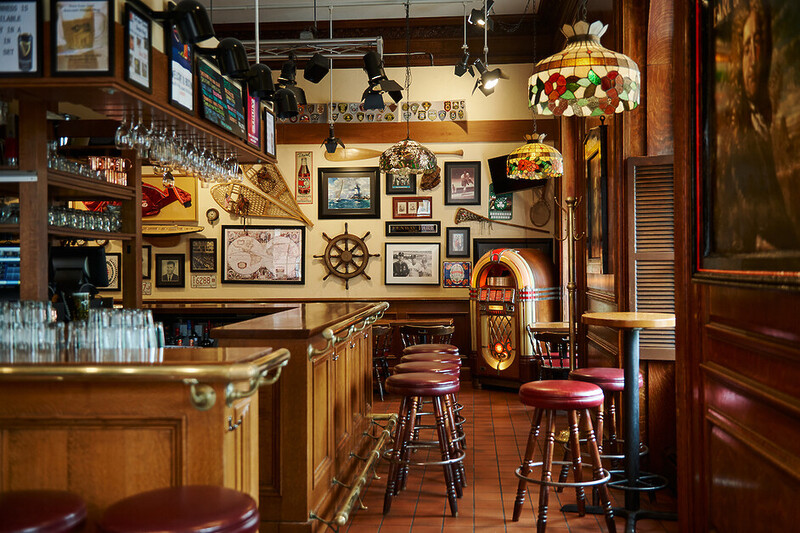
From thought-provoking art to the popular culture of American sitcoms. No visit to Boston would be complete without a trip to the place where everybody knows your name…the Cheers bar. It’s just across the road from the public garden, its wrought iron railings and awnings and Cheers sign familiar to anyone who watched the show which first aired in the UK in the ‘80s and ‘90s. Judging by the number of people crowding inside to have a drink and something to eat, it still has a big following.
There are cardboard cut-outs of sharp-tongued waitress Carla and barfly Norm on his stool, along with photos of the whole cast and a gift shop where you can buy a T-shirt with famous quotes from some of the characters. I had a drink and raised a toast to them.
Boston is a fantastic location for a solo trip; it’s easy to get about and I never once felt uncomfortable walking round on my own and everyone I spoke to was friendly. It’s a city with a complicated history which is central to America’s notion of itself and there’s a lot to contemplate. I certainly learnt a lot. And although they once cast the British out, we’re more than welcome in Boston now. For a short visit anyway. Cheers to that.
Images (C) Doug levy, Kyle Klein, View Boston, BHC, NEA..
Tell Me More About This Guide to Boston
Other attractions on the CityPASS® are Franklin Park Zoo, Harvard Museum of Natural History, and the Museum of Science.
For general information about what to do and where to stay in Boston check out Meet Boston
Direct flights to Boston operate from London Heathrow all year round; London Gatwick seasonally; and Edinburgh seasonally.
If you enjoyed this review, why not check out these similar posts:
 Boston Harbour Hotel. A perfect view of an Iconic harbour.
 The Fabulous Norway in a Nutshell®. Discover everything Norway offers in a day as a solo traveller.
 Travel Talk Radio Episode 8. Find out about Airport Drop Off Fees and the best Solo Holidays.
 Insider Guide to Grand Cayman. Culinary month is perfect for foodies.


