Natasha Blair learns all about the birth of Istanbul in the V&A’s latest exhibition Constantinople to Istanbul – One City Two Empires.
The first major UK exhibition to explore 1,600 years of extraordinary artistic production in one of the world’s most influential cities across two successive empires: the Byzantine and Ottoman has arrvied at the V&A.
Spanning AD 330 to 1922, the exhibition brings together works of art, design and architecture. Showcasing the enduring creative legacy of an imperial capital that shaped the Mediterranean world and beyond, it provides a new perspective on a city defined by artistic excellence.
Istanbul is one of those exotic cities where both Middle Eastern culture sits alongside those of Europe. Where did it all begin? Formerly known as Constantinople, the city served as the imperial capital of both the Byzantine (AD 330–1453) and Ottoman (1453–1922) empires.
The exhibition explores their distinct artistic traditions alongside the continuities that linked them across sixteen centuries. Tracing shifts in patronage, production and cultural exchange, it reveals how the city’s changing fortunes shaped its creative output and how its artistic legacy resonated across both the Christian and Islamic worlds.
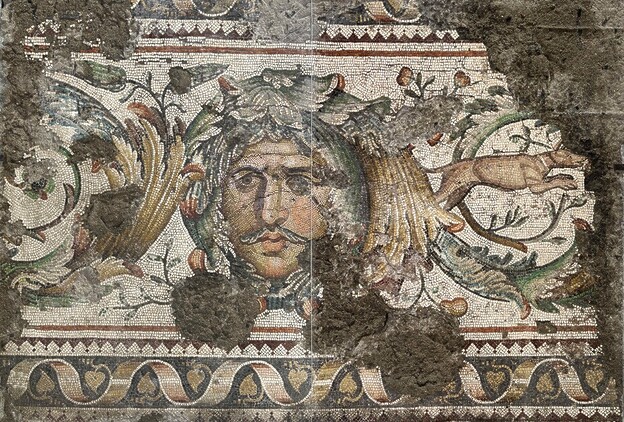
Showcasing over 200 objects in four main sections, on display are rarely seen decorative arts such as fine silks and textiles including historical costumes; ceramic tiles, mosaics and tableware, precious metalwork, jewellery, sculpture and architectural furnishings, works on paper, manuscripts and paintings.
Presented chronologically, the exhibition’s first section Roman Beginnings explores the transformation of Constantinople into the capital of the Roman Empire. Beginning in AD 330 under Constantine the Great, it introduces the city’s strategic location and the infrastructure that underpinned its success, from advanced water systems to formidable, fortified walls whose protective power was reinforced by icons and relics.
Situated between the Black Sea and the Mediterranean, Constantinople developed into a diverse, cosmopolitan metropolis, attracting merchants, artists, scholars and pilgrims from many lands. This section also evokes the Hippodrome, the social and political centre of the city, where chariot races became a powerful vehicle for imperial spectacle and propaganda.
The second section, Heaven and Earth explores the central role of art and architecture in the religious life of the city. It examines how Byzantine emperors harnessed sacred imagery to project power and authority, while artists and patrons continued to draw on the classical past.
The section looks at the visual culture of Byzantine churches, including the great 6th century Hagia Sophia, one of the most important buildings in the world, bringing together a rich range of liturgical objects including reliquaries, icons and manuscripts to evoke the material culture of the Church of Constantinople.
Examples of works produced in Constantinople’s imperial workshops and commissioned by emperors and their courtiers reveal the extraordinary skill of Byzantine artists, from jewellery and metalwork to textiles and silk, the city’s most prestigious and coveted luxury product.
Power and Reach
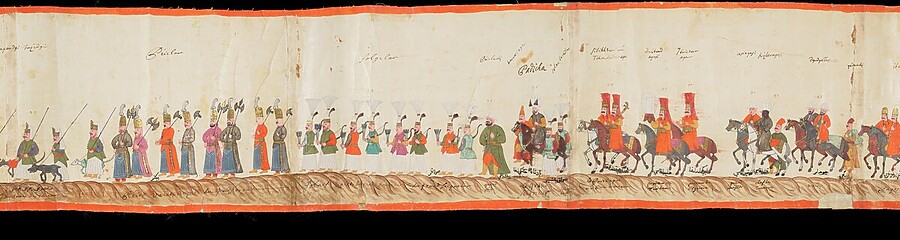
Power and Reach examines how the Ottoman Court projected authority in peace and war through visual spectacle. It highlights the role of luxury materials such as silk, precious stones, ivory, silver and gold in shaping imperial identity, brought to life through grand public processions. Objects from the court include ceramics, clothing, furniture and metalwork including jewellery and armour alongside paintings and works on paper by Ottoman and European artists, capturing the splendour and global reach of the Ottoman Empire.
Life in the City
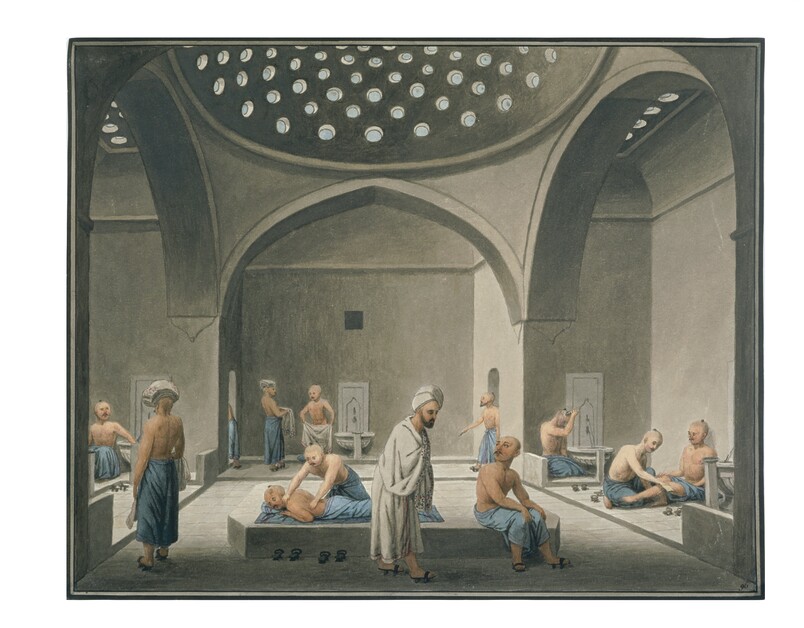
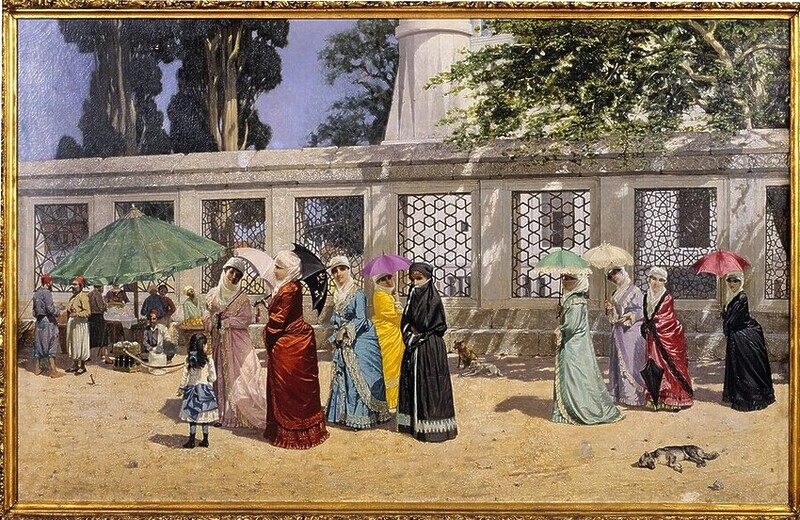
Life in the City explores Istanbul as a cosmopolitan centre of diverse languages, faiths and artistic traditions, making it one of the largest and most sophisticated cities in Europe. Through dress, music, architecture and domestic items, it brings together rare objects that reveal both religious coexistence and the rhythms of urban life, from coffee houses and bathhouses to leisure, fashion and the performing arts.
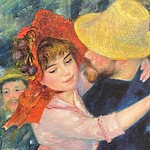
This section also traces changing tastes in the 19th century, when Parisian and other European influences increasingly shaped the fashion, design and modern identities of the citizens.
All images (C) V&A.
Tell me ore about Constantinople to Istanbul – One City Two Empires.
V&A Victoria & Albert Museum, South Kensington, Cromwell Road, London SW7 2RL.
Nearest tube – South Kensington on the Circle and Piccadilly Lines.
The exhibition Constantinople to Istanbul: One City, Two Empires runs until 9 May 2027.
Not to be missed is a visit to their Victorian dining area if only to admire the amazing décor while enjoying anything from a coffee to a full-blown meal. Don’t forget to look in the Gamble Room, designed to dazzle, with its stained-glass windows, and walls and columns covered in a variety of ceramic tiles.
Open daily 10.00 – 17.45. Friday 10 – 22.00.
Galleries 38 and 39, Weekday £25.00 Weekend £27.00
Advance booking recommended.
Closes Sunday 9 May 2027