
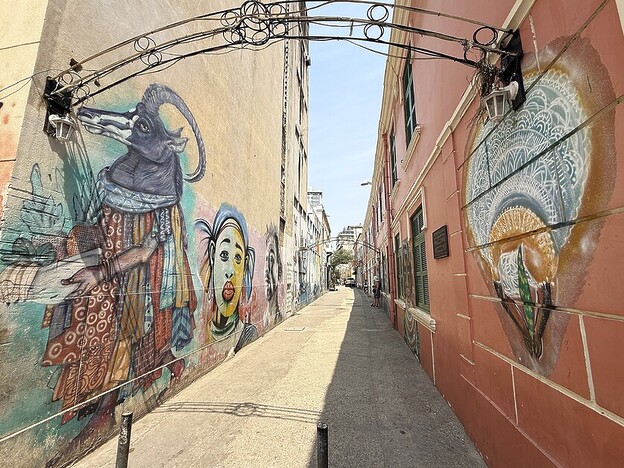
Andy Mossack offers up his Insider Guide to Luanda, a modern metropolis packed with contrasts, colonialism and remarkable people.
Sami Gustavo Curti is a remarkable gentleman. A legendary professional Angolan session percussionist who has spent a lifetime touring the globe but also dedicating himself to an extraordinary undertaking much closer to home.
He founded Biemba Juvenil over 20 years ago to teach percussion to young children living in Luanda’s deprived Bairro da Socola community to help keep them off the streets. Joining him and twenty of his students aged between 5 and 14 at the club for a demonstration of their percussion prowess was an absolute privilege. The sound of all those fabulous batuque congas playing in unison rhythms was such an uplifting experience – as was the joy I could see on all the kids faces.
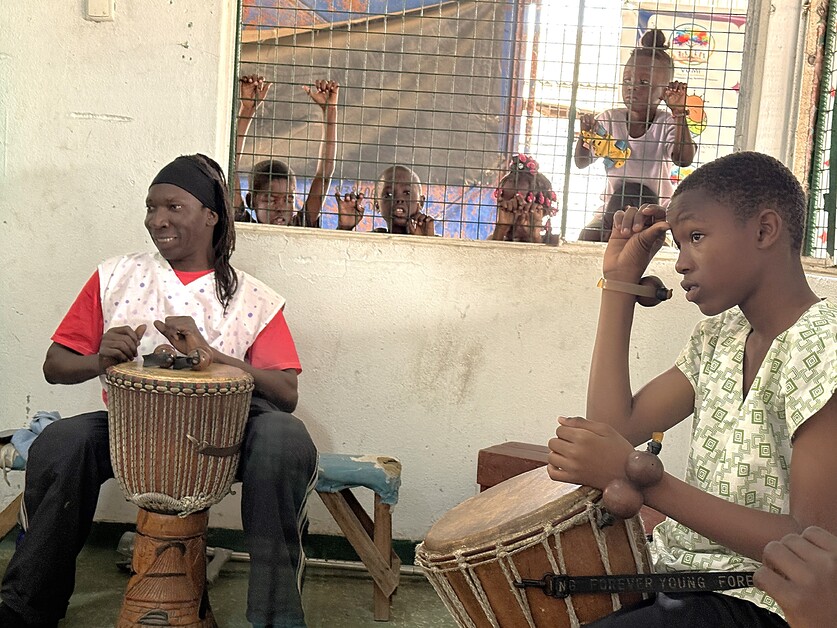
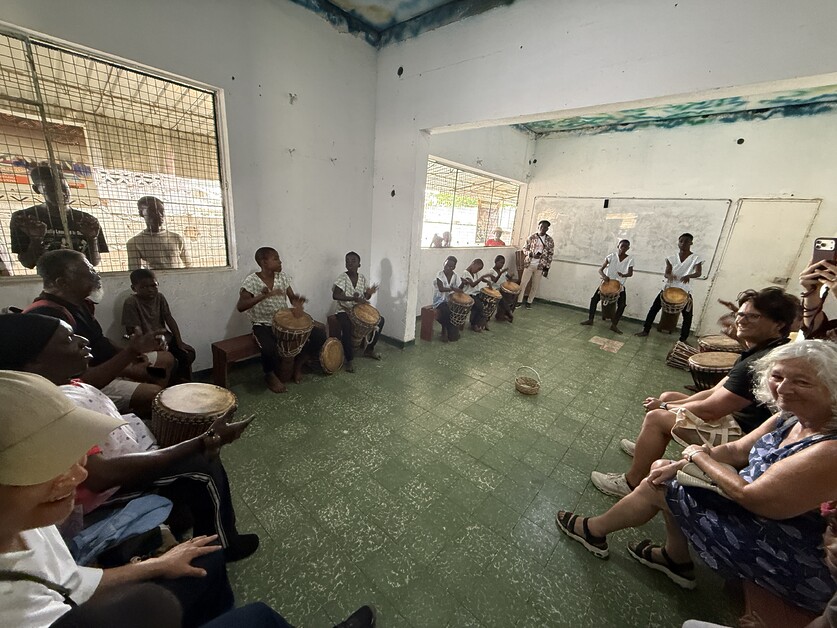
Sami’s Biemba Juvenil visit was just one of the memorable experiences I encountered in Angola’s capital. I was in Luanda at the end of an epic expedition cruise with Swan Hellenic having voyaged down the west African coast from Ghana to Angola. With the help of local expert guides Carlos and Jose from Sungos Adventures, it was the perfect opportunity for me to check out the best things worth visiting in this extraordinary city.
So come with me as we explore my insider guide to Luanda, and an opportunity to glimpse a few places well off the tourist treadmill.
Confidence after conflict
Angola is the second-largest Portuguese-speaking country after Brazil and its turbulent history is well documented. Portuguese colonialism left its tragic mark as Angola, Congo and Gabon alone supplied half of all the slaves sent to the Americas. Then of course in more recent times, the country endured over forty years of brutal conflict.
The Angolan war of independence lasted fourteen years until 1975 quickly followed by a vicious civil war lasting twenty-seven years until 2002.
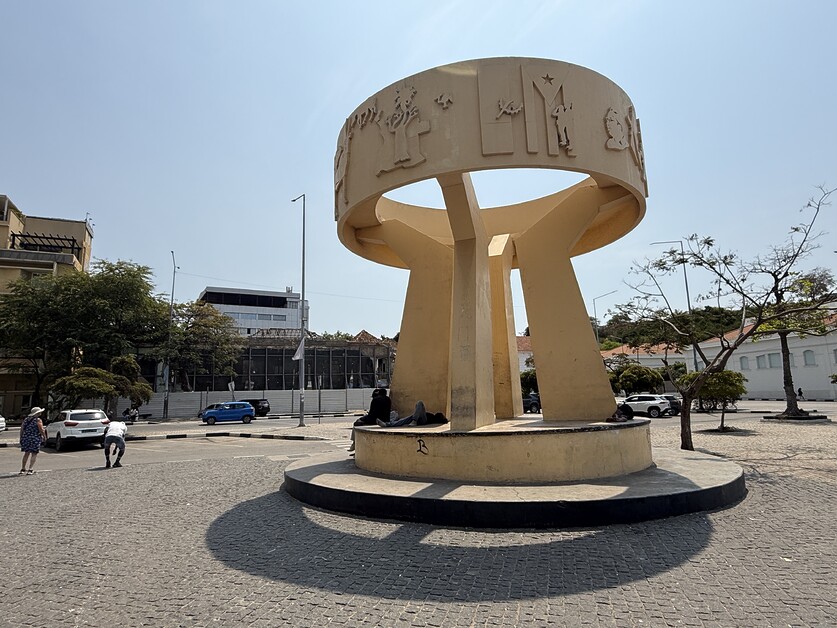
Yet despite all this there is a real sense of optimism now as over the last twenty four years Angola has reaped prosperity thanks to its oil, gas and diamond exports. Just a first glimpse at Luanda’s towering skyscrapers along the palm-lined Avenida Marginal 4 de Fevereiro containing all of the world’s leading oil and gas companies will leave you in no doubt as to its importance. Modern construction directly under the ancient São Miguel Fortress ( Fortaleza de São Miguel) looking down on it atop the hill opposite. Oil alone brought in an estimated revenue of $24.5 billion in 2025 generated by a million barrels produced every day.
It is all eye-watering stuff. However, how much of this ultimately reaches the general population is perhaps questionable as there remains a marked gulf between the wealthy and the rapidly expanding slum communities (locally called musseques). These communities are not unlike the dense urban favelas you may have heard of in Brazil for example.
A Royal Resting Place
An intriguing location to visit in Luanda, particularly for first timers, is the hallowed Mulemba Waxa Ngola one of the most sacred trees in Angola. The mulemba is a huge wide-canopied African fig tree reaching heights of up to 20 metres that holds immense significance among Angolans – they call it the Tree of Kings. An ancestral gathering place for leaders and elders to sit under in the shade to discuss important matters.
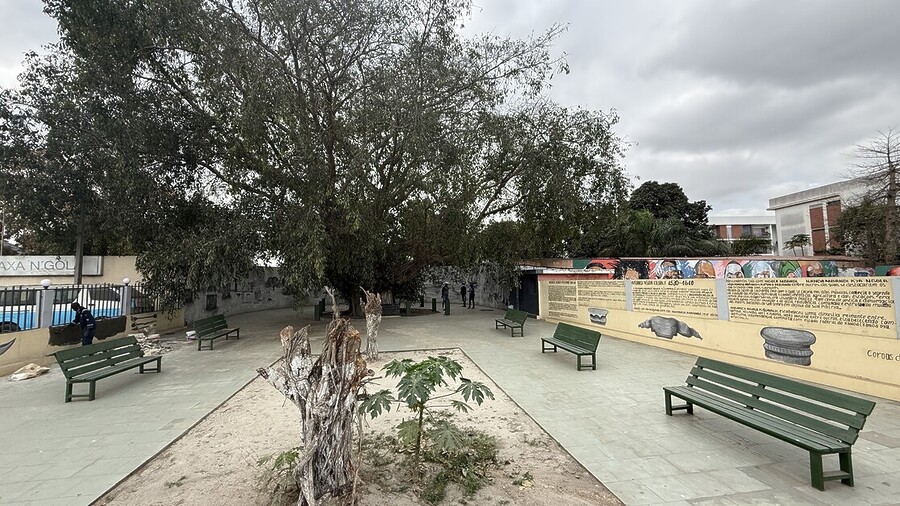
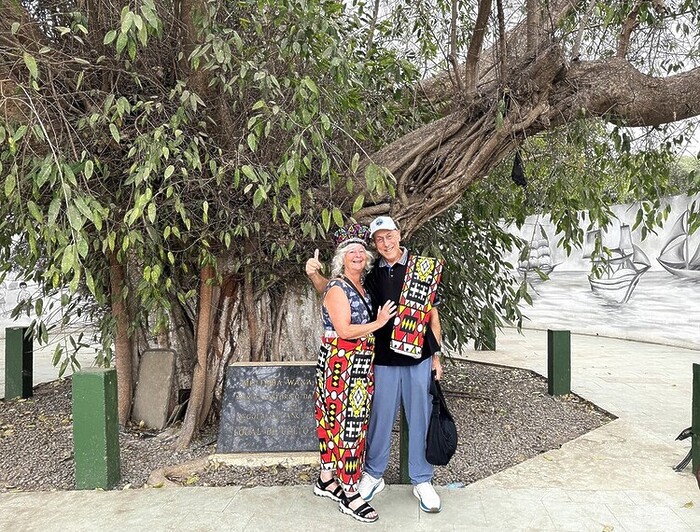
The Mulemba Waxa Ngola is one of the most famous, sitting proudly beside the Estrada do Cacuaco, one of Luanda’s busiest roads, a rather inauspicious spot for such a symbolic tree you might say. But it was on this spot, as legend tells it, where King Ngola Kiluanji Kia Samba planted the tree as a territorial boundary marker for his Ngola kingdom. A name which eventually became Angola. It was also the place where the famous 17th century warrior queen Ngola Njinga rested during her many battles against the invading Portuguese colonisers.
Today, safely cocooned inside a gated area it still looks mightily impressive. There’s a mural running around the perimeter wall celebrating the story of Luanda’s founding, while under the Mulemba’s giant branches my wife and I proudly accepted some traditional samakaka fabric from Carlos and Jose. It was a proper moment I can tell you.
Taking a Musseque Walk in Socola
Guided by Carlos and Jose, it was a short stroll from the Mulemba tree into the Bairro da Socola musseque, known locally as just Socola where I had my unforgettable percussion experience with Sami. This sprawling barrio lies beside the giant shadow of the Luanda oil refinery, which for a working class community like this might well provide wage labour. It’s home to several thousand people and I found it surprisingly organised with a few unpaved main streets, self-built concrete block homes, street vendors and small home-front shops.
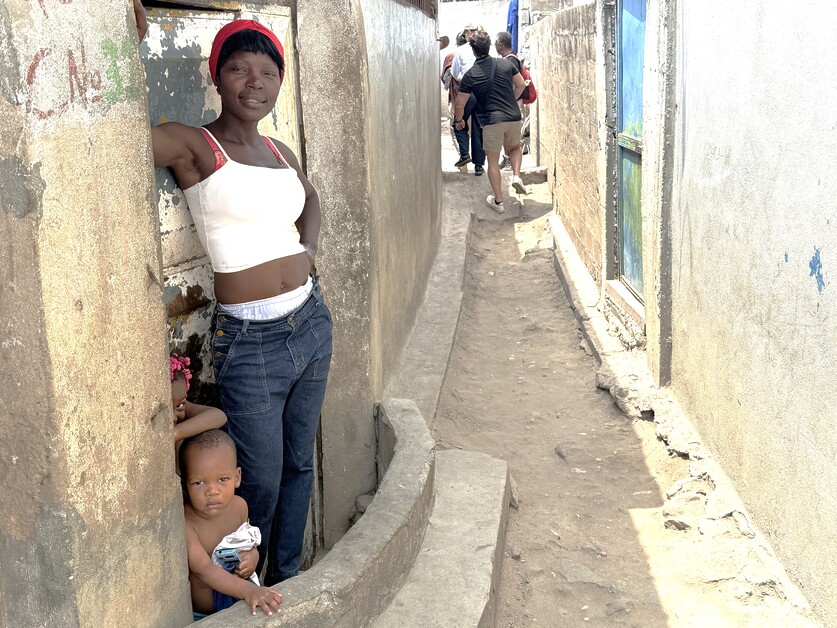
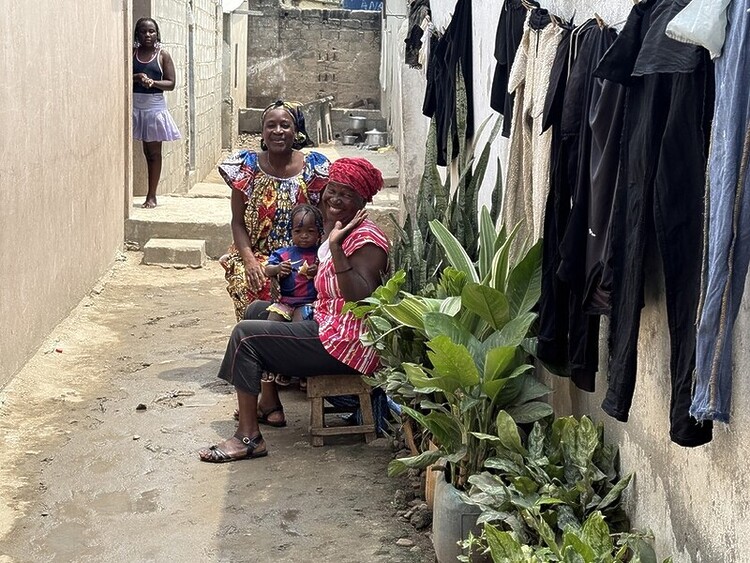
Walking through the twisting alleyways between the homes provided us with a fascinating glimpse of everyday life here. Kids playing football, women hanging out washing, a few people sitting outside a café chatting. On the face of it, quite a casual calm picture. The locals were very friendly, and many were more more than happy to have their photo taken (you have to ask first of course).
I felt a real sense of organised neighbourhood community here where residents organised activities from religious singing to schooling and social support. Thankfully, there are organisations who can help support the bairro, and we visited a shop selling locally made arts and crafts with all of the proceeds going back into the community.
Kwanza Market
While all the tourists flock over to Mercado do Artesanato for their Luanda market fix, we had a completely different experience at Mercado Kwanza. Jose told me “This is where all the locals come to shop for proper bargains. You will not believe the things for sale here, everything from food to car engines”. And you know what, he was right on the money.
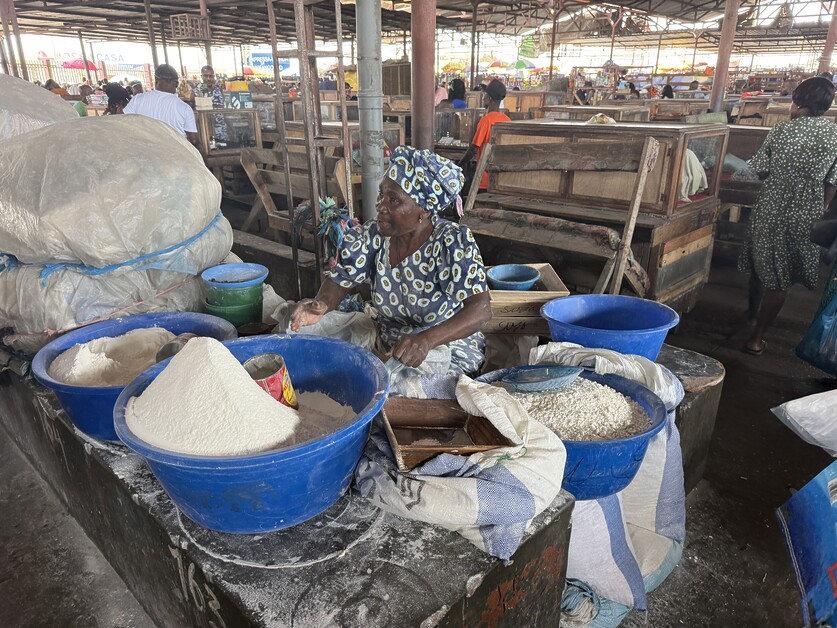
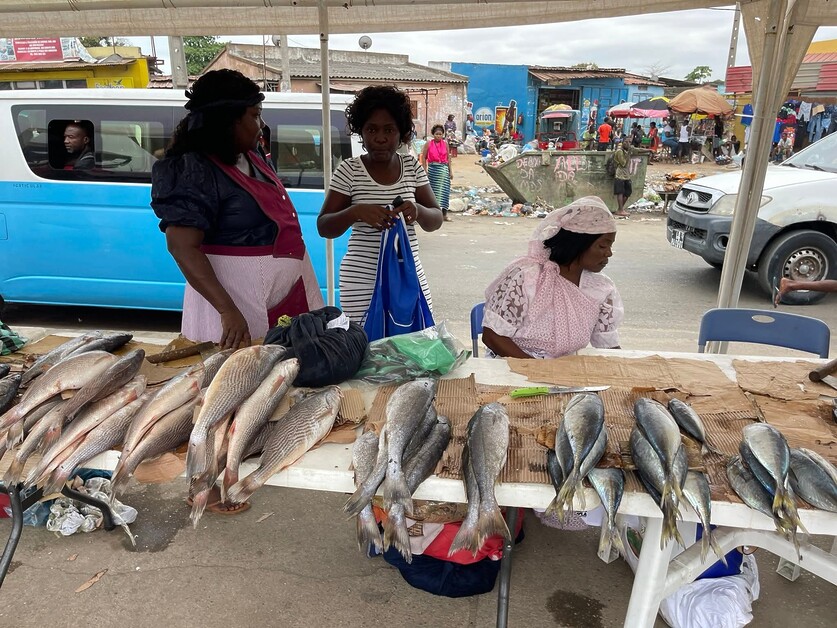
Kwanza was a real slice of authentic life. Named after the Angolan currency, this teeming indoor/outdoor cash only market is where locals can buy fresh produce, household goods, electronics, audio equipment, furniture and everything else in-between. And yes, including car parts! Some of it from slightly dubious origins I suspect, but, as they say, the grey economy is booming when you have a low income. Unmissable.
Some more touristic Luanda landmarks worth seeing.
Luanda’s downtown district is very walkable and still retains some colonial history and charm. The Iron Palace (Palácio de Ferro) is well worth a look. It was designed and built by Gustav Eiffel in the 19th century and made reportedly from iron scraps left over from the Eiffel Tower. Originally bound for Madagascar, the ship carrying the prebuilt palace ran aground off the coast of Angola in 1890 and was claimed by the Portuguese colonists and placed in the city instead. During its heyday it was very popular as an art centre but during the years of conflict it fell into disrepair. It was renovated in 2008 and stands as a symbol of the Luanda’s rebirth.
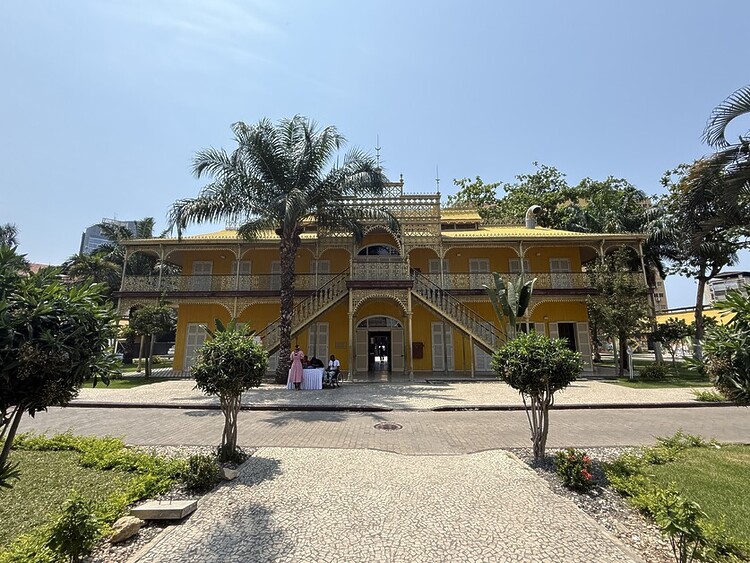
Just across from here is a striking yellow baroque building, now the provincial courthouse, it wa once the palace of Dona Ana Joaquina, a very wealthy 19th century socialite who made her fortune as a slave trader. Speaking of slave trading, do not miss the very colourful Mercantile Street (Rua dos Mercadores). One of the oldest streets in the city it was the centre of trading during colonial times, where slaves were sold along with diamonds and gold. There are moving murals along the walls depicting the dark days of slavery.
The towering white concrete and marble X along the Avenida Marginal is Luanda’s Monument to the Unknown Soldier dedicated to the Angolan soldiers who fought in Angola’s war for independence. It is a moving sight particularly at sunrise and sunset.
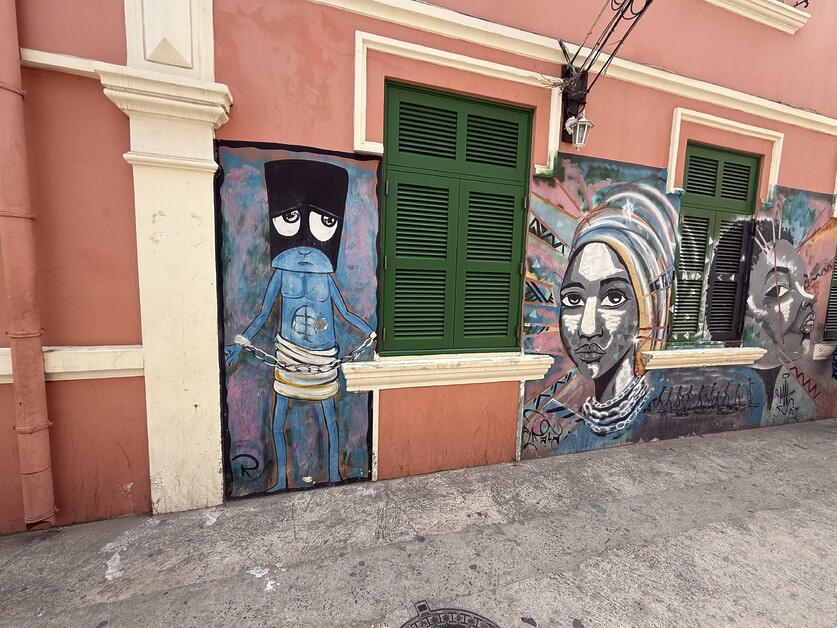
Close to here, the extraordinary pink Banco Nacional de Angola building dates back to 1926 and was officially recognised as a place of cultural heritage in 1995. Adjacent to this and almost entirely underground is the Currency Museum (Museu da Moeda).
Finally, if you are seeking some proper retail therapy, the Shopping Fortaleza Mall is the largest shopping centre in the country. Over five floors and offering 80 national and international shops, its waterside location at Luanda Bay is pretty striking. Its name is supposed to pay homage to the Fortaleza de São Miguel above it on the hill opposite, although I’m not convinced historians are too keen about that.
Luanda offers visitors a fascinating day out and in the safe and capable hands of Sungos Adventures a very worthwhile adventure around the city’s less trodden tourist trails. And I have no doubt Sami’s percussion demonstration will be something you will cherish for the rest of your life.
Imagws (C) Andy Mossacvk and Sungo’s Adventures.
Tell me more about this Insider Guide to Luanda.
Sungo’s Adventures offers a full-day guided tour of Luanda, exploring the Angolan capital’s vibrant neighbourhoods, local communities and bustling markets. The experience provides an insight into everyday life, local traditions and trading culture, with opportunities to meet residents, discover traditional crafts and sample authentic Angolan cuisine over lunch at Funje House. The tour includes a professional guide, private transport, bottled water and lunch. €370 for two people.