Lynne Wallis offers up her insider guide to Moravia’s gastronomy and wines while delving into its fascinating history.
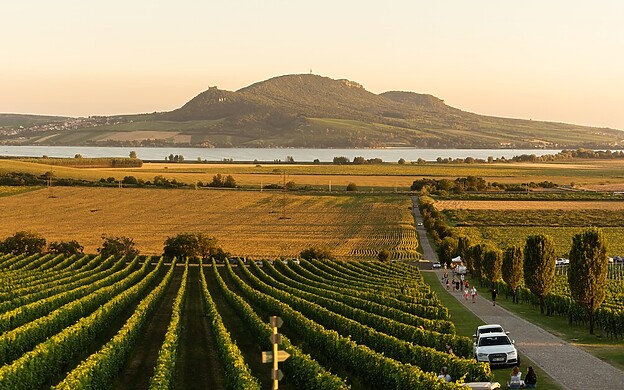
The sound of champagne corks popping is the soundtrack to the many wine-tasting tours in South Moravia in the East of the Czech Republic. It’s loud, so they must be magnums, right? It is in fact multitudes of gas-fired canons going off at timed intervals to scare away the birds and stop them nibbling the grapes.
They sit on tripods that are regularly moved around to confuse the winged attackers. There are fewer restrictions on ‘bird bangers’ in Czechia than surrounding countries, hence the volume. Some visitors complain that it sounds like a war zone’ but once they taste the wine they may agree the noise is worth it. Almost all of the wine produced in the Czech Republic is made in South Moravia, and much of it is of very high quality.
Vineyard tours are just one of the attractions currently being promoted to make a salient point – there is a lot more to The Czech Republic than Prague, beer and Kafka. These efforts are paying off, with visitor numbers to Czechia rising so rapidly over the last decade that they are now among the fastest-growing in Europe.
Affordability is responsible for some of Czechia’s newfound popularity, with vineyard tours for example a fraction of what it would cost in France. Along with a thriving arts and cultural sector, the burgeoning number of high quality, affordable restaurants – gourmet dining has grown exponentially in Prague and South Moravia since the Michelin Guide’s expansion last year (2025) into a country more commonly associated with dumplings than haute cuisine – are making Czechia attractive to those who appreciate fine food and enjoy tasting wine where it was made.
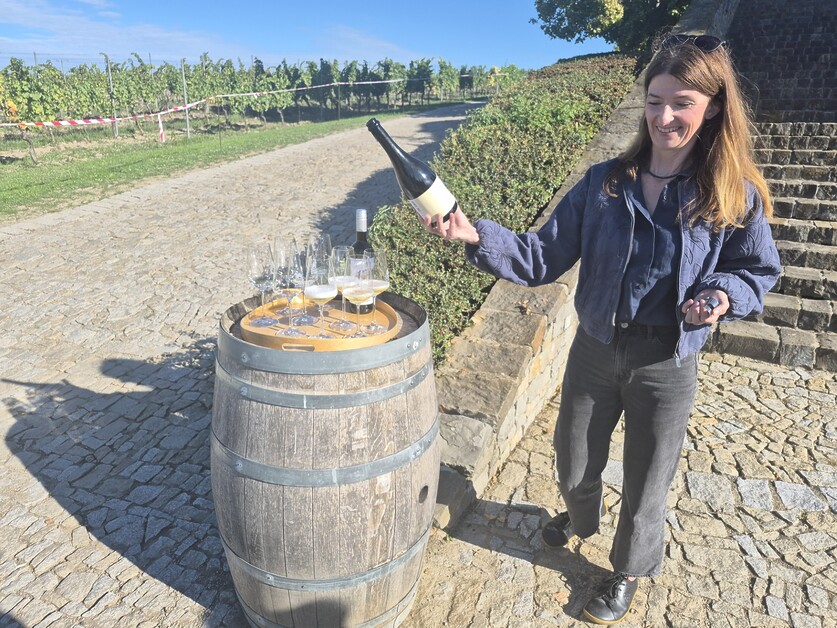
Grapes have been growing on the site of the Sonberk vineyard near the Austrian border in South Moravia since the 2nd century AD. Sonberk produces 150k bottles of award-winning wines every year including Reisling, Sauvignon Blanc and Muscadet, making it one of the most internationally-recognised wineries in the Czech Republic. In 1522 grape growers on the site received a written order from the King requesting wine to be brought directly to Prague Castle.
Now, Sonberk exports to Japan, Sweden and the USA – only a small amount trickles into the UK. You can walk into Sonberk and have a glass of wine for £1, or take part in a ‘premium tasting event’ for £30, whilst a wine tasting tour in France will cost upwards of £195.
Mikulov
The charming town of Mikulov, two hours from Brno Airport on the Austrian border, was the cultural centre for Moravia’s Jewish community between the 16th and 19th centuries – only one of its 12 synagogues survived Nazi brutality. This picturesque town is known for its wealth of Viennese Baroque architecture, the most notable example of which is Mikulov Castle, a former medieval fortress which was transformed into an Austrian-style chateau in the Baroque style in the 17th and 18th centuries.
Mikulov is an excellent base for touring the region’s 1,200km of wine trails, and there are some fine restaurants there. Lunch at Vino Radosti is highly recommended – the owners have a hotel too, but everything is done remotely so there is no human welcome, but it is close to the town’s main square and the rooms are clean and bright.
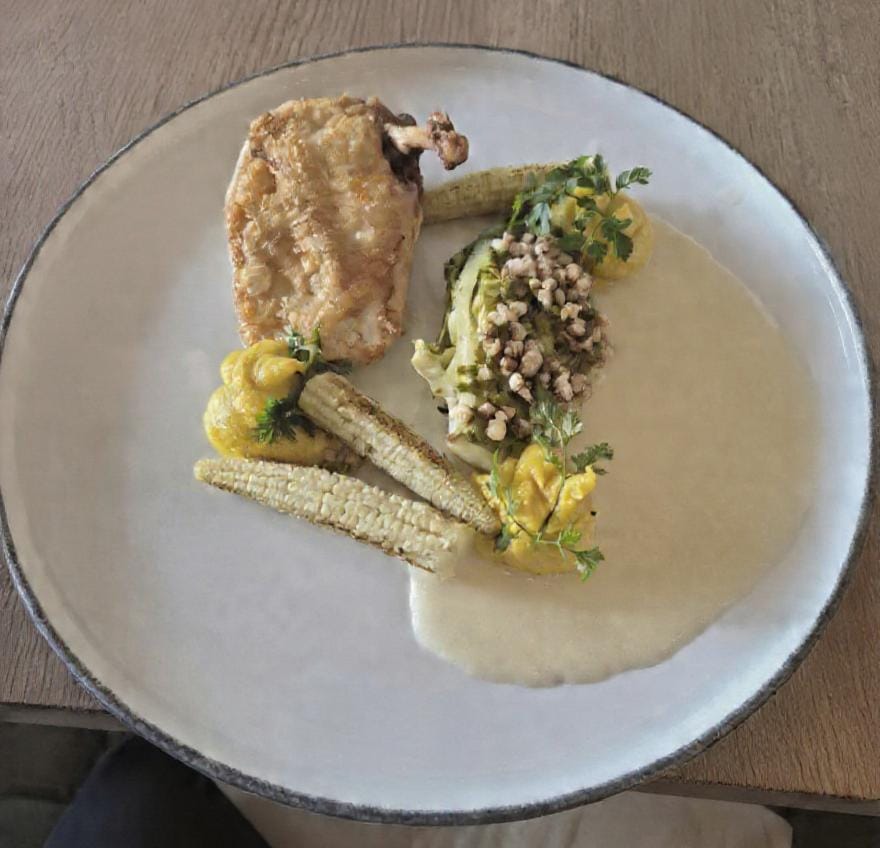
Their restaurant (not part of the hotel but nearby) is outstandingly good, and the carrot soup with coconut milk is excellent. This was followed by fried rooster breast with sweetcorn puree and mini gem lettuce leaves stuffed with a walnut filling which was satisfying and delightfully flavoursome. Lunch in this modern, light, pleasant space with excellent service is highly recommended.
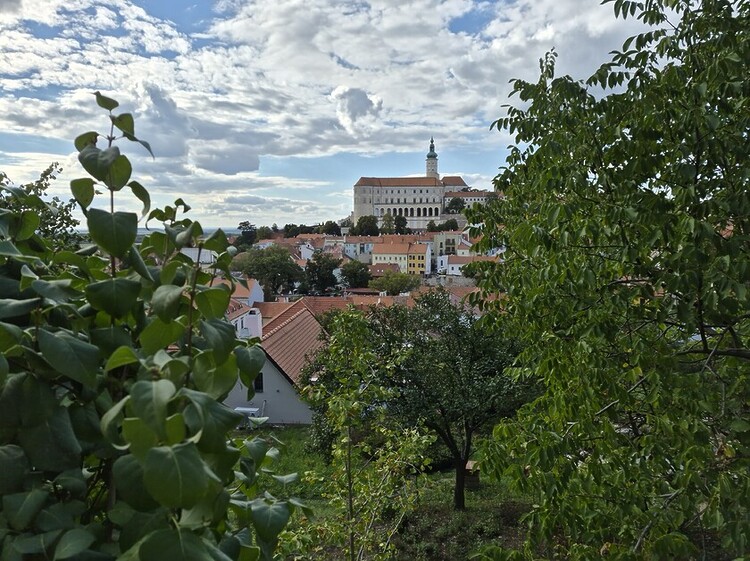
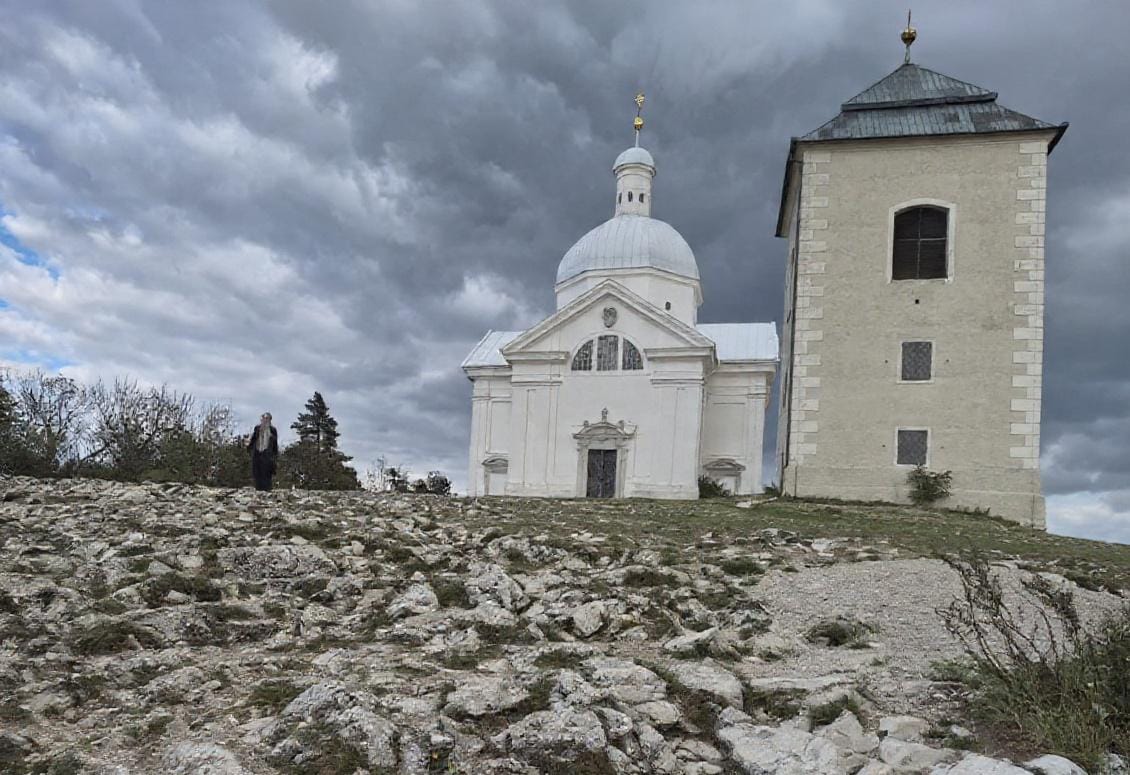
A postprandial walk to the top of the Holy Hill, one of three surrounding the town, is worth it to see the Chapel of Saint Sebastian and its bell tower, built in 1630 to protect the town against the Plague following a severe epidemic in 1622. It is one of the oldest shrines in the Czech Republic and the panoramic views are a decent prize at the end of the climb, although the bird bangers are at full volume so you may want to plug into your own soundtrack.
In the evening you might want to sample Chateau Petit’s famous cauliflower cream soup, perhaps followed by salmon trout with horseradish, leek and cabbage, or gnocchi with saffron, sweetcorn, tarragon and cheese? Chateau Petit serve an ice cream made with pork fat and blue cheese, which has a distinctly smoky flavour but is actually rather good, if you can erase porcine images from your imagination.
Exploring Brno
Czechia’s second city, the unpronounceable Brno, is worth a visit if only to see the splendid Villa Tugendhat, built by the architect Ludwig Miles van der Rohe in 1929 for the Czech-Jewish industrialist Fritz Tugendhat and his wife Greta. The villa, now a UNESCO World Heritage site, was revolutionary in its open-plan design and use of space and quickly became a symbol of modernist architecture.
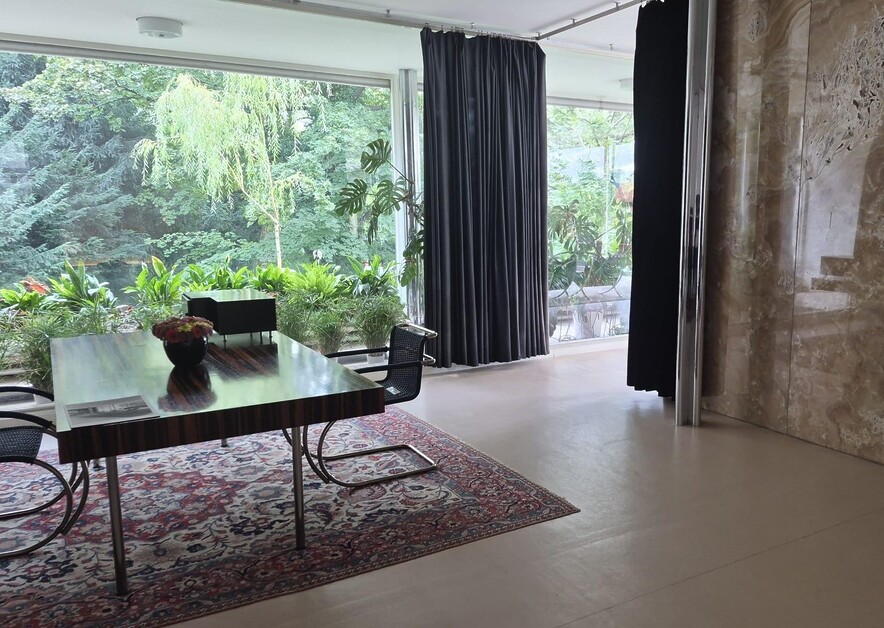
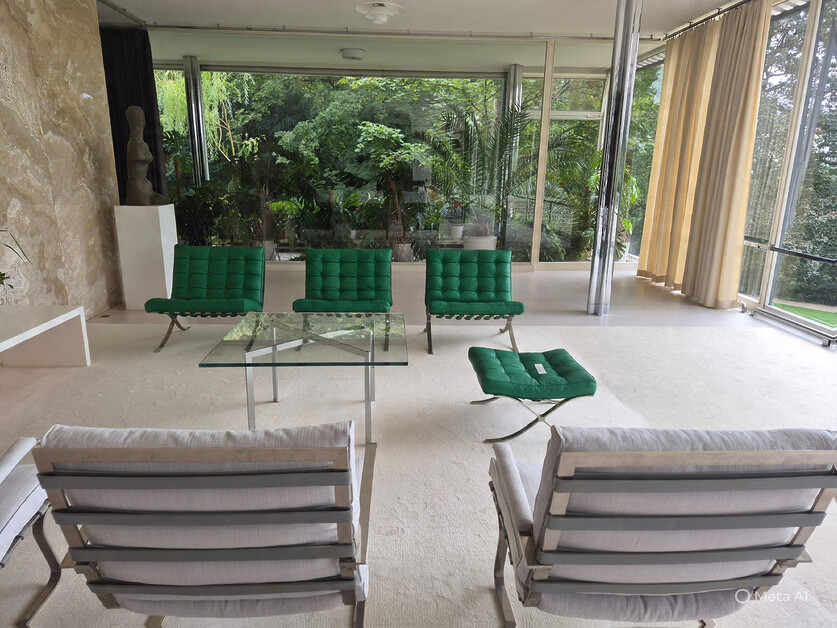
Almost 100 years since it was built, its influence on architecture remains powerful, and it still manages to look contemporary, with its clean lines, purity of design, use of industrial materials such as steel and concrete, and large areas of unfilled space. The interior is connected with the exterior, so the ‘art’ isn’t on the walls – it is visible through the vast windows in the form of an enormous winter garden and views of the city. The 18 square metre windows can at the press of a button be made to disappear into the villa’s basement, an advanced design feature for its time.
The Tugendhat family were only able to enjoy their home for ten years before it was seized by the Gestapo in 1939, forcing the family to flee to Switzerland. They never returned, but evidence they were there includes childs’ handprints on the walls which were discovered by an archaeological forensics team during renovations. Villa Tugendhat is now owned by the City of Brno and is open for guided tours, costing around €20 per person.
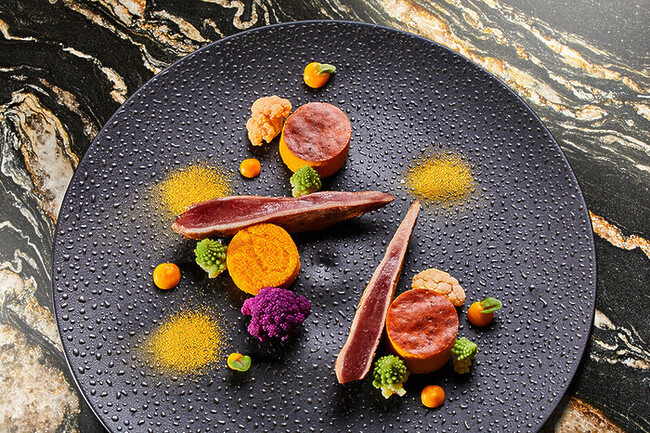
After the longish walk uphill to the villa and a full tour, it will be lunchtime and the Michelin-recommended Kohout na Vine is worth a visit, but this isn’t a venue for vegetarians. There are two lunch menus featuring rooster, duck and mackerel dishes, all of which got good reviews by our party, and their peach with jasmine, buttermilk and almonds was deemed by many of us to be little piece of heaven on a plate.
Another Michelin-recommended eatery in Brno is the cavernous Element restaurant which is packed out with corporate people. Many hotels in Brno are what Czechs call ‘Congress’ hotels for businesses. The delegates, liberated from a long day locked in conferences, flock into the town to grace its many restaurants. The food was pretty good but it was by no means outstanding, compared to other venues.
En route to our final destination of Zlin our party stopped to take in the Joza Uprka Gallery in Uherske Hradiste which is a must-see for those who appreciate bucolic landscapes and folk art. The Moravian-born painter the gallery is named after studied art in Prague and is best known for his colourful paintings of head-scarved women in folk costumes working in the fields in the 19th century.
If you need a break from gastro-dining and want to lunch somewhere typically Czech after going around the gallery, you will do no better than the nearby warm, welcoming Restaurace Konicek, but you need to be very hungry. And thirsty.
On offer are some very heavy dishes including deep fried creamy camembert and buttery potatoes accompanied by UK-sized glasses of wine. In the gastro restaurants in Czechia wine is served in very small amounts, so small in fact that I mistook one ‘glass’ for a taster, replying ‘Lovely, thank you, please pour’ before realising the wine waiter had poured all I was getting. Konicek serves a sweet rich local dish of fluffy yeast dumplings served with a delicate vanilla custard and plum jam covered in sugar and almonds. Be warned – Dukatove Buckticky is extremely filling.
Fans of functionalist architecture must take in the city of Zlin where this style of building was driven by a man who made shoes. On a very large scale. Anyone over about 50 in the UK, and in many other countries will almost certainly have worn a pair of Bata shoes at some point. The city has become a virtual shrine to Tomas Bata, who built ‘Bata houses’ for his employees, paid for schools and hospitals and is even credited with saving thousands of young mens’ lives – Bata made boots for soldiers during WW1, which meant male employees who were part of the war effort weren’t called up.
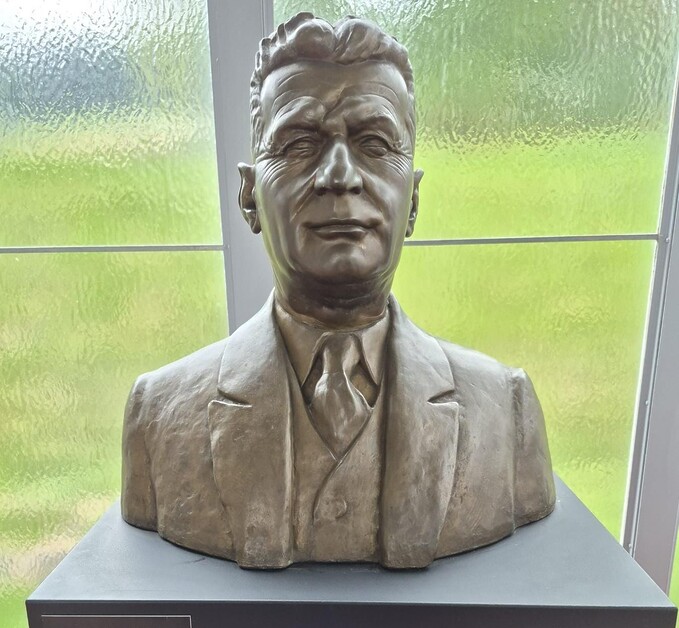
He built a skyscraper in the 1930s which at 77.5 metres tall was then the second highest building in Europe, containing a 6m sq office contained inside a working elevator. By age 47, Bata had 25k employees all over the world.
There is a memorial building to him, built in the functionalist style of the city’s buildings, with the distinctive red bricks, white columns and steel poles. Bata was killed in a plane crash when he was 56, and a replica of the plane is exhibited inside the memorial which is worth visiting, along with the Bata shoe museum which is a must for foot fashionistas, with hundreds of shoes on display from the 1890s right up to the present day.
From the Hotel Prior and Energy Spa, a luxurious modern five-star hotel in Zlin that doesn’t disappoint on any level we travelled to our final gastro-stop, the Michelin-starred La Villa, just North of Zlin. Awarded its much sought after star in December last year, La Villa serves mainly French cuisine with some local influence and offers two menus – one for meat and fish eaters, the other for vegetarians.
Our party was served a set menu, constituting of a rather fine lobster ravioli with sour cherries to start, followed by succulent duck breast with sweet potato croquettes, orange, carrot and sea buckthorn, and finally (we thought) was smoked fig panna cotta – an unexpected fourth course then arrived, a rich raspberry mousse with passion fruit and mango jelly with white chocolate.
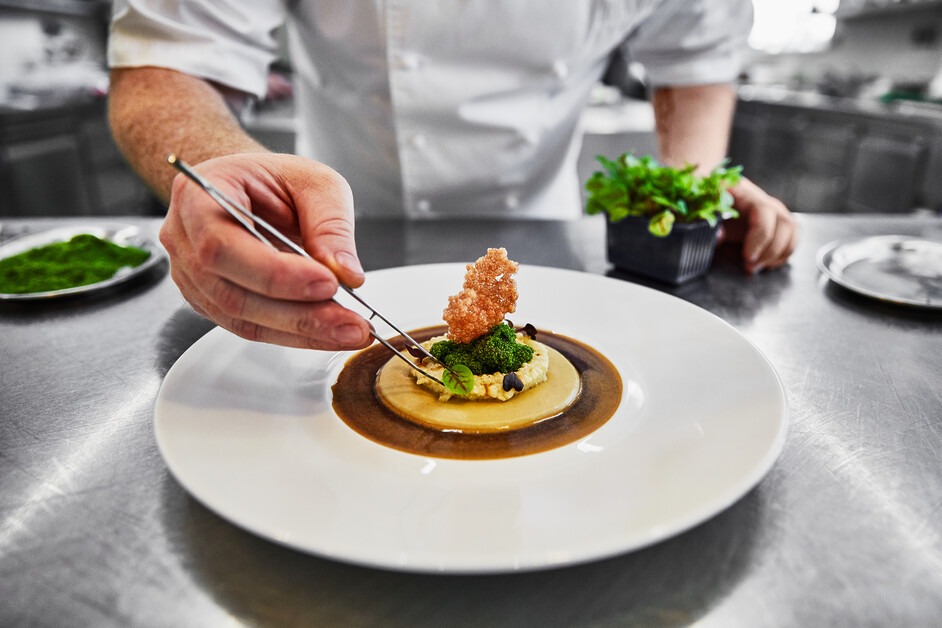
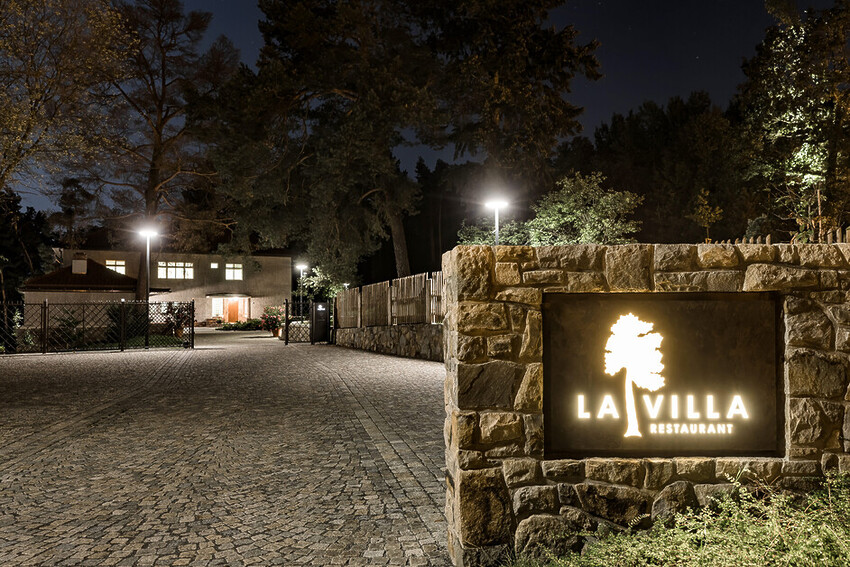
Dinner at a one-star Michelin restaurant in Czechia is around one third of what it would cost in the French equivalent, so it’s not hard to see why Czechia is becoming a favourite destination for fine diners and wine lovers, particularly those who are interested in architecture and art. There is indeed a lot more to Czechia than beer, Prague and Kafka, and much of it can be found in Moravia.
Tell me more about this Insider guide to Moravia
For more information on all the destinations mentioned in Lynne’s Insider Guide to Moravia please go to Visit Czechia
Recommended Restaurants
All prices are without wine or service
Vino Radosti, Mikulov, two courses around £30 pp
Chateau Petit, Mikulov, three courses £32 pp
Kohout na Vine, Brno, three courses £25 pp
Restaurace Konicek, Ukerske Hradiste, two courses £25
La Villa, Zlin, three courses £35
Recommended Hotels
Hotel Vino Radosti, Mikulov, £70 double room
Hotel Prior & Energy Spa, Zlin, £112-225 for a double room depending on the season.
Clarion Congress Hotel, Brno, approximately £100 per night