
From The Sublime To The Disturbing, David Gerrie Visits Auschwitz-Birkenau State Museum And Wieliczka Salt Mine,Two Of Poland’s Most Visited UNESCO World Heritage Sites.
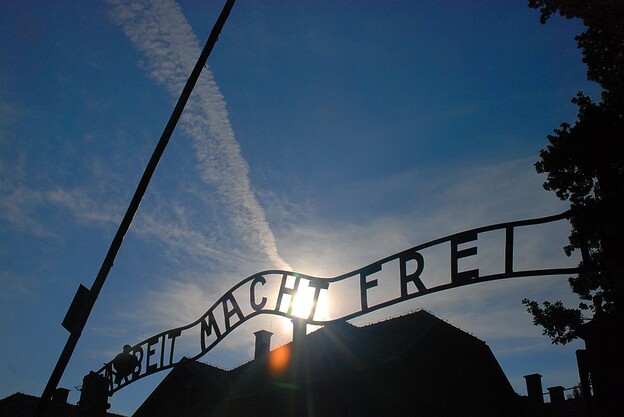
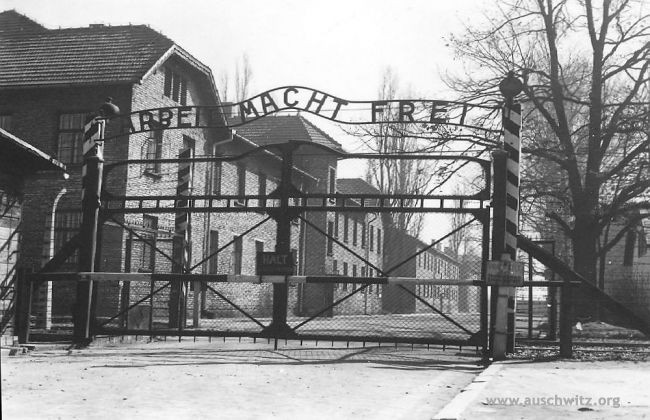
What can you say or feel when confronted with one of history’s greatest lies? “Arbeit macht frei” (“Work makes you free”). Forged in iron, these capital letters atop the gate marking the entrance to Poland’s Auschwitz-Birkenau State Museum were made from metal pipes originally used to expand the camp’s running water network.
They’re not particularly ugly and, for a few moments at least, look like any other slightly gothic portal. But look a little harder, focus on the infamous railway tracks which carried the murderous cattle trucks crammed with doomed innocents, shift your imagination into gear, and they belie the first indications of the human cruelty and suffering which stand just a few yards beyond.
These are the the former Polish military barracks the Nazis converted into 28 two-story brick blocks housing up to 18,000 prisoners at the camp’s peak. They are disturbingly unprepossessing, but as a heavy downpour starts, take on a much heavier air of foreboding. Covering some 104 acres, this section of what is now a modern UNESCO World Heritage Site is where your audio-aided guided tour proper starts.
You’ll be led there from the visitors’ centre at Auschwitz 1, as it is known, through a very modern roofless concrete tunnel lined with concealed speakers, from which the names of those who perished punctuate the silence you’ve been asked to observe.
For those still unaware, from 1940-45 1.3 million people were deported here. Of the 1.1 million victims who perished, 1 million were Jewish.
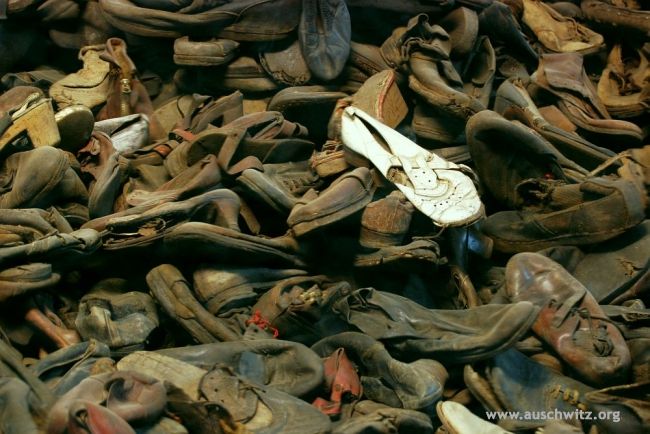
This is not the place to describe in any detail the exhibits, both physical and photographic, 2.2 million people a year are exposed to inside these huts. My wife asked me later how the experience had been. The only word I could summon up was “relentless.”
A brief shuttle ride ferries visitors to Auschwitz II–Birkenau, the main mass-extermination and killing centre and home to the large-scale gas chambers and crematoria, now marked by little more than some 300 brick outlines.
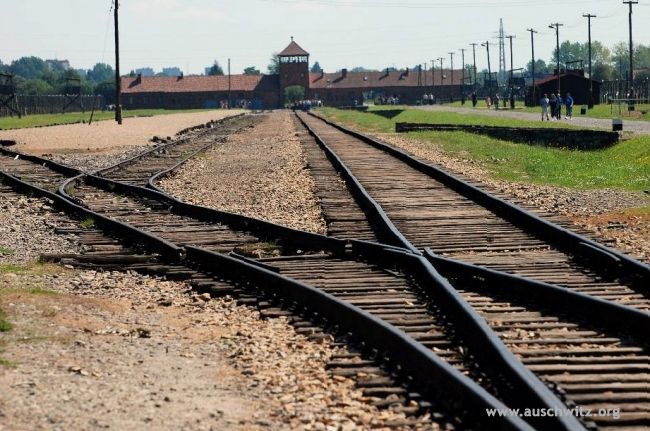
If Auschwitz 1 is essentially a very interior experience, Birkenau is the exact opposite. With no buildings in sight, the sheer scale of the space this 370-acre facility occupied is staggering. Look as far as your eyes can see, to the tall trees which form the horizon. Beyond these, we’re told, the camp spread out over the same distance again, surrounded by ten miles of barbed wire fencing.
And I have to say it’s downright weird to see groups of tourists having their photos taken in front of the single original cattle truck which stands alongside the skeletal remains of what was once the platform the deportees slumped onto. Not to mention kids shooting videos while they dance on the tracks.
But there is an upside, if this location merits the use of such a word. Some of the huts used to house prisoners are now being restored at a cost of some two million euros per unit. Top architects, engineers, builders and building materials have been brought together in the hope these recreations will stand as testimony to what went before for at least another hundred years.
Never before have the words of the Spanish-American philosopher George Santayan hit home so hard: “Those who cannot remember the past are condemned to repeat it.” They will forever ring true.
Wieliczka Salt Mine
The subterranean wonders of the 13th Century Wieliczka Salt Mine may seem an abrupt segue, but the vast majority of visitors to Krakow do opt for a combined trip with Auschwitz-Birkenau. But be warned – doing both means you’ll have a very long day (usually 11–12 hours) with a total of roughly five to six hours’ walking some five-and-a-half miles across both sites. Much better to spread your outings over two days.
You’ll get some idea of the exertion required with your first steps down the mine – 380 wooden ones, to be precise, down a spiral staircase which leads on to a more gradual 420, eventually taking you 443 ft below the surface.
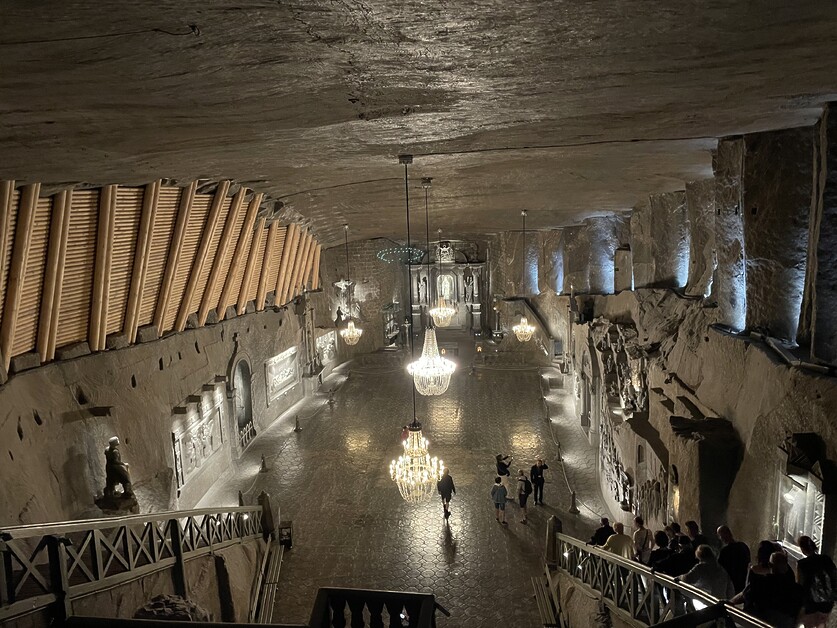
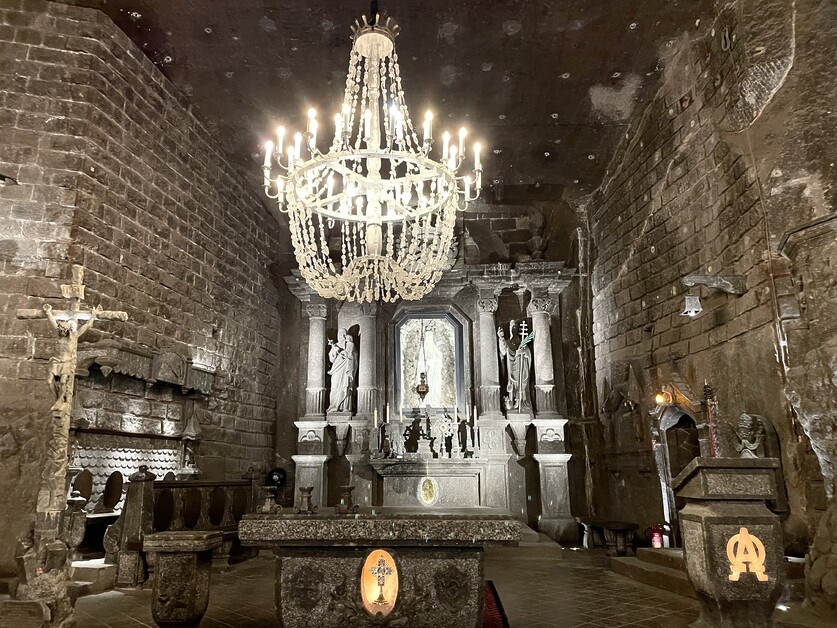
Along the way there’s an underground lake, four chapels punctuated by numerous statues carved by amazingly artistically talented miners out of the rock salt, and more recent sculptures by contemporary artists, culminating in the cavernous, crystal chandelier-bedecked St. Kinga‘s Chapel.
Exiting the mine is much easier on the legs, thanks to a one-minute vertical ascent using original miners’ lifts, each fitting seven to nine tightly-grouped people.
Auschwitz images (C) Auschwitz State Museum
Tell Me More About Visiting Auschwitz State Museum And Wieliczka Salt Mine
Guided tour in English around £32
Tour from Krakow including hotel pick-up, transfers and guided visit from about £16 at Viator
Guided tour in English around £27
Tour from Krakow includes hotel pick-up, transfers and guided visit from around £62.
Combination tour about £83 from Viator
Transportation
Private return transfer from Krakow hotel to either destination from £83
E: office@annbus.pl T: +48 570 010 212
If you enjoyed this review, why not check out these similar posts:
 Guide to 5 alternative Edinburgh attractions. Discover fabulous attractions many tourists miss.
 Walking the Salt Route in Liguria. Discover dramatic Italian landscapes perfect for hikers.
 Trip review: Gdansk, Poland. Discover A beautiful Baltic gem.
 Guide to Krakow. A city with a bigger story than just its wonderful massive mediaeval market square.


